Comments about technological history, system fractures, and human resilience from James R. Chiles, the author of Inviting Disaster: Lessons from the Edge of Technology (HarperBusiness 2001; paperback 2002) and The God Machine: From Boomerangs to Black Hawks, the Story of the Helicopter (Random House, 2007, paperback 2008)

Monday, January 28, 2013

Grand Central's Centennial: New Light on Wicked Problems

 Bill Gates has this OpEd about the solving world's toughest problems and why measurement makes a difference. Says he: 
"In the past year, I have been struck by how important measurement is to improving the human condition. You can achieve incredible progress if you set a clear goal and find a measure that will drive progress toward that goal ..."
Perhaps measurement and commitment can be enough ... as long as it's not a wicked problem. Policy wonks often use that term to describe an interlinked nest of dilemmas that resists all straightforward solutions. Thoroughly wicked examples from today's headlines include international drug trafficking, medical cost control, and runaway global warming. 

Why so wicked? Entrenched interests lie deep inside. Such interests are happy with the current situation, and they know how to scratch up would-be reformers. It's why B'rer Rabbit loved his patch of thorns.

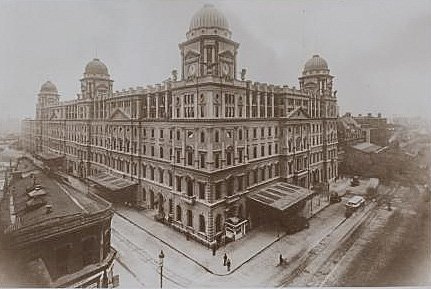
Athough the phrase hadn't been invented in 1903, “wicked problem” described a set of hazards growing up around a railroad terminal at 42nd Street in Midtown Manhattan. Even so, regulators, engineers, and the New York Central came together to craft a world-class solution. Just as visitors marveled at shafts of sunlight through the high windows, Grand Central threw new light on breakthrough problem-solving. (Photo © Royal Geographical Society, London, UK / The Bridgeman Art Library)

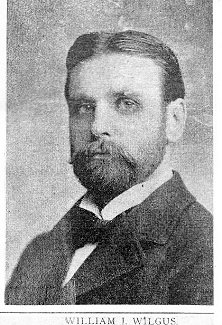
The lessons are still useful one hundred years after the complex opened in February 1913. It wouldn't have happened without an unreasonable man, a brilliant and self-taught engineer by the name of William J. Wilgus.
As of New Year's Day in 1902, Grand Central Station was the principal railroad station in Manhattan. Traffic was growing by the year but there wasn’t room to squeeze in even one more track outside the building or another platform inside.

While the big ground-level railyard cut apart the neighborhoods and the steam engines showered the neighborhoods with ash, New York Central refused to do any more than renovate its station to pack in more passengers. The station was profitable but posed many risks to passengers, trainmen, and nearby residents.

Things began to change on January 8, 1902, when one steam engine in a tunnel leading to the station smashed into another train that had stopped. The incoming train’s engineer couldn't see the danger signal for all the smoke and steam. All the papers covered the fatalities in horrifying detail, and the New York City Council, working with the state legislature, ordered that operations at the station shift from steam power to electric. The city gave the railroad five years to finish the job.

At this early stage, just making the sudden switch from steam to electric power would be a huge headache. Certainly no reasonable person could have expect the railroad to triple its workload by choosing to tear down its newly renovated station and to rip up the half-mile long railyard to the north so it could be put into a big hole. And to restore the streets. And to keep daily traffic moving through the station even as it was torn down and rebuilt. (Photo: Library of Congress)

Fortunately for posterity, William Wilgus was simultaneously unreasonable and pragmatic. Born in Buffalo in 1865, he had risen to the position of chief engineer and vice president of the sprawling Vanderbilt-owned railroad network.

In one remarkable September afternoon, eight months after the rail disaster, Wilgus sat down at his desk and listed all the biggest problems facing the railroad and its station. In a few hours, with one Eureka moment after another, he arrived at an elegant solution: not just a win-win, but a win-win-win.

Wilgus started with the bitter fact that government was forcing the railroad to do something it hadn't wanted to do: shift quickly from steam to electrical power. While that seemed a bad thing for the railroad's bottom line – don't Ayn Randians tell us that all government mandates are outrageous? – Wilgus saw that shifting to electric power might be a good thing. Maybe a great thing. Why? 

Electric power opened up entirely new options. One option was putting buildings on beams over the railyard, since the occupants wouldn't be smoked out by steam engines. But why not sink the railyard below street level and put the new buildings at street level instead? Wilgus realized that if he took the railyard deep enough to split the underground rail traffic into two levels, and added loops around the new station, this would greatly improve the traffic flow. Before the sun set that day, Wilgus drew a plan that would meet the government deadline, more than double the station’s passenger capacity, transform midtown Manhattan, and turn a liability to an immensely valuable asset.

Wilgus advised the railroad executives that if they erected stout columns and beams between the tracks, these would form a foundation for skyscrapers above the railyard, standing along Park Avenue. Land developers would pay to construct the buildings but write annual rent checks to the railroad, which would cover costs at the new Grand Central Terminal.  

The excavation required blasting a pit as much as 70 feet deep, which brought a bit of the Panama Canal into midtown New York. The excavation proceeded one “bite” at a time, moving from Lexington Avenue on the east to Madison on the west. This required tearing up the permanent track, stripping away the soil to expose the bedrock gneiss and schist of Manhattan Island, so they could blast it loose. The pit then filled with massive and complex steelwork to support the two-layer track, along with the streets above. All told the railroad created 15 acres of artificial ground over the hidden railyard, propping pavement and sidewalks and trees atop two miles of steel framing. This is what the new streets looked like before skyscrapers filled in the holes:

Wilgus resigned in 1907 after a dispute with the railroad, but before leaving he helped devise a system of ramps, service windows, and rooms that separated commuters from long-distance travelers, and those arriving from those leaving. It eased the pedestrian flow so well that people-moving solutions crafted at Grand Central can be seen at malls and airports today.

The new terminal opened just after midnight on February 2, 1913, to much fanfare. Even as rail traffic diminished after World War II, it survived each economic crisis because New Yorkers valued its beauty aboveground and efficiency underground.

So, New Yorkers, during Grand Central's centennial look beyond the magnificent building at street level and see the deeper lessons. The usual way to tackle a wicked problem is to use reasonable approaches like a direct attack with legislation that fills in all the unhappy details, or else to try and buy out the problem with huge public subsidies. Much of the time, even most of the time, such reasonable approaches fail. 

Grand Central Terminal, the miracle at 42nd Street, suggests that sometimes we need the unreasonable. When I was in law school we studied the “reasonable person” standard and that's fine for Contracts and Criminal Law, but I like to think of Grand Central Terminal as a triumph of the unreasonable man.

Saturday, November 17, 2012

Midland Grade-Crossing Crash: More on event recorders

The NTSB has a go-team at the site of the wounded veterans' rail tragedy this week at a grade crossing (location: Garfield Street) in Midland, TX

Investigators are talking to witnesses, examining signals at the grade crossing, studying video from personal cameras and a patrol car, and downloading event-recorder data from the Union Pacific's head-end locomotive, which includes forward-facing video and probably external audio as well.

So once again, tragically, event recorders are in the news. I've blogged about the role of VDRs and FDRs in investigations of the Costa Concordia wreck, the SuperJet 100 cliffside crash, Delta Mariner's bridge allision, and the Air France Flight 447 crash. 

In the case key information about the moments leading up to the crash should be preserved, unlike in the collision of two UP freight trains this summer in Goodwell, OK, which reportedly destroyed the event recorders in both head-end locomotives. (The NTSB hasn't released more than a preliminary report on the Goodwell crash, and there's no public docket that collates other information, so that's about all that we have for now about that mainline rail disaster.)

Readers may be curious about the cameras deployed on engines. I don't see information specific to the UP locomotives, but from a recent passenger-rail contractor solicitation for locomotive upgrades, here's a photo of a typical locomotive dashboard prior to installation -- I find it helpful because it shows the engineer's view. 
Here's the forward-facing camera as installed. It feeds video information to a recorder in a crash-resistant case elsewhere in the cab. That recorder also stores sound from an external microphone as well as and instrument readings.
These are not necessarily HD cameras, but can show the color of signal lights almost a half-mile ahead.

NTSB investigators also look to the larger setting, and events well before the crash. Their timeline might include a chronology of other crashes at the Garfield grade-crossing, along with notes about changes in safety procedures or equipment. It's not clear whether this location's status as a "quiet zone" made any difference, given the automatic crossing gates and the fact that the engineer did sound the air horn before the crash. Lights and grade-crossing gates are meant to provide motorists with 20 seconds of warning -- did they?

According to news reports, previous rail-vehicle crashes at this location had occurred at speeds less than half that of this train, which reportedly was moving at 62 mph (which, as far as we know, complied with speed limits at this location in Midland). So one question might be whether safety procedures kept pace with changes in railroad speeds.


Sunday, November 11, 2012

Parbuckling the Costa Concordia: Preparations now underway

From time to time I've been following developments with the sunken cruise liner Costa Concordia, and it's back in the news. Some very expensive work by a joint venture of Titan Salvage and Micoperi Marine Contractors is underway to haul it off the island of Giglio.
This illustration from the Costa press office shows some of the parbuckling job to come:
While it's never been attempted on such a scale, the principles are proven. Navy salvage teams used parbuckling to raise the USS Oklahoma in 1943:
Every marine salvage job is different. The Oklahoma project had to deal with suction from harbor mud, for example.

Concordia is a very large and structurally damaged ship in a tenuous position: it's resting on a few rocky ledges, with some sections entirely unsupported. This problem isn't obvious to the eye, but is plain enough to salvage engineers. Here's an image showing the underwater layout, from Italian authorities:
 The steps:
  • First, install equipment on shore and underwater, such as anchor points and support platforms
  • Next, attach huge pontoon floats to the port side (the side that's been above water all this time)
  • Then haul it upright, so that it sits in flooded condition atop a temporary underwater platform customized for the reef profile
  • Then attach a second set of pontoons to the starboard side (the side that's now underwater)
  • Pump out the pontoons so that the ship's keel clears the platform, then tow the assembly to a dry dock for repairs
Here's a Costa website called The Parbuckling Project with short animations that explain each step. Here's a screenshot of the site's front page, with diagrams:
One of the foremost risks here is breaking the damaged ship in two (or three) pieces as the cables drag it upright. So the winches will take the strain very slowly. 

Saturday, November 10, 2012

Rescue beacons for sailors: Don't leave home without 'em

Among Superstorm Sandy's casualties was the three-master Bounty. Two people died: sailor Claudene Christian and the master of the replica vessel, Robin Walbridge (Photo, Reuters):
But fourteen of the crew were saved, courtesy of Coast Guard Air Station Elizabeth City. Here's video of the rescue:
 News of the successful mission reminded me of a conference I attended in Dallas in February, the Goodrich Rescue Hoist Users Group. A rescue hoist in action looks like this:
The hoist is mounted in the white fairing at the upper right of the photo. The wire rope is barely visible because it's so small in gauge. 

Here's a link to the specs on a Goodrich hydraulic hoist with 160 feet of usable cable.
 
The annual user-group event, which is small in size but international in scope, is a chance to share lessons learned between pilots, EMTs, hoist operators, flight mechanics, and incident commanders. After giving my talk on the history of high-rise rescue (drawn from extra research files I gathered when writing The God Machine) I took a seat, glad for the chance to learn from the experts in helo-based rescue.

One of those I talked with was retired USCG rescue swimmer Butch Flythe, who later put me in touch with the pilot of one of the two Jayhawks that went out to pluck Bounty survivors from Hurricane Sandy's 30-foot waves.  
The helos are based out of Air Station Elizabeth City - here's the unit's Facebook link.

My question to Lt. Commander Steve Cerveny of Jayhawk 6012: "What's something that search and rescue crews would like the seafaring public to keep in mind?" His reply: 
"The one thing that stands out in any case, but in this one in particular, is locating the survivors.  The first person we picked up was located by our C-130 and I was directed immediately to them because of the light on their survival suit.  So this day and age I think everyone is thinking technology in the way of an EPIRB to be found and rescued.  That’s only part of it in my mind…I think it gets us very close, but if you have a signaling device when we get close it saves us time from having to look for the survivor.  The lights on the people and rafts in this SAR case were instrumental in 14 people being rescued as quickly as they were."
Following are links about the items that LCDR Cerveny referred to.

An EPIRB is a radio beacon for summoning distant rescuers to a sinking vessel or crashed airplane. Newer EPIRBs include a GPS unit that sends out a geo-located signal. 

A personal beacon is a small locator unit attached to the upper portion of an immersion suit. Depending on how much that person wants to pay it can feature a strobe light, a radio transmitter, or both. Here's a Firefly model:


Monday, November 5, 2012

One57 Crane: More video information

Vince H. sent this link to a cellphone video, which captured a longer time interval before the jib went over the top:

Sunday, November 4, 2012

One57's Tower Crane: Secured for now


This weekend the damaged jib on the luffing tower crane at One57 in New York was secured against the building frame. Sailors might analogize the work to reefing a sail.
 
As I mentioned in my initial post of Oct. 29, the damage began when hurricane winds pushed the crane jib upward until it reached a vertical angle, then overcentered. 

Here's a picture from yesterday's work (from RT, photo Michael Heiman, AFP)
The stabilization job, which started Saturday morning, sounds simple enough: use a manual crank to spin the superstructure of the Favelle Fabco Model 440 crane on its slewing ring so that the jib hangs close to the building, then temporarily secure the metal lattice work to the building with wire rope. 

That way, the jib won't break off and in a few weeks contractors can erect a second crane to take down the first one (probably setting off a new wave of traffic closures, but smaller in scope.)  
 
New York residents and business owners pushed out by safety orders were highly frustrated after six days of waiting for this. So why not have started carrying out such a seemingly simple plan as soon as Sandy's winds died down, rather than start six days later?

Because the crane had to be checked carefully for damage. New Yorkers have seen several crane catastrophes, such as the collapse of a tower crane in 2008 due to human error at the jobsite, and no public official wants to be the cause of another.  

And I can see why they were so cautious about shifting this one around. Normally a tower crane is pretty well in balance. The balance is maintained by a heavy counterweight on a short jib at one end of the superstructure, offsetting the dead weight of a jib (also called the boom) at the other end.  

The counterweight on such a tower crane is massive (I haven't seen the figure, but 40 tons is typical) because it has to offset the jib's weight, the weight of any cargo it's lifting on the hook, plus the dynamic loads from movements of jib and cargo. From MarineDigital, here's a closeup of the counterweight on a 440D model:
Along comes Hurricane Sandy, the jib hinges over the top, and suddenly the jib isn't balancing the counterweight anymore; now the boom has joined the counterweight on the same side of the slewing ring. The tower crane is now seriously off-balance.

Here's a picture from earlier this week showing how the storm shifted all the weight to one side (photo Allison Joyce, Getty):
Consider also the dynamic force that the slewing ring, mast, and uppermost tieback to the building had to absorb as the jib pivoted over the top and draped itself atop the counterweight. The tieback, made of temporary steel beams, is silhouetted at the bottom of the photo.

As I said in the earlier post, it's a testament to the Model 440's sturdy construction that the crane and uppermost tieback were able to absorb this shock load without dropping something heavy to the street.

Although from a distance the crane might have appeared strong enough to handle this weekend's simple procedure, safety experts had to consider not just the functionality of cranking mechanism itself but also whether shifting the crane might cause something big to break off -- whether the damage had been such that the original margins of safety were gone

On the question of cause: News reports quote the principals at One57 as saying that all hurricane procedures were followed, such as jib set and brakes released so that the crane could weathervane with wind shifts; that's routine for off-duty tower cranes because it reduces the wind load greatly

There's no official word yet on why the wind was able to push the jib over the top when other area cranes were not so affected, but the following is one possibility other than some freak of turbulence. While support cables hold a jib up, only gravity holds it down. The higher the angle the jib was set before the storm, the less the crane could weathervane to point the jib downwind. In short, for two reasons, a jib parked at high angle is more likely to be caught by a wind gust and go over the top.  

The Tower Crane Interest Group in the UK has published a series of warnings about luffing jib tower cranes left at a high angle before a storm. Here's an excerpt from one of those publications, "The Effect of Wind on Tower Cranes in Service":
Putting the crane in the out of service condition generally includes ensuring that the jib is free to “weather vane” when out of service so that the minimum wind area is presented to the prevailing wind. On luffing jib tower cranes it is also important that the jib is left at the correct out of service radius, not the minimum radius, to ensure that there is sufficient wind area to ensure that the crane is able to “weathervane”.
Here's a cellphone video on the Daily Mail website, of the One57 crane's jib going over the top. But the video is short so we don't know from this snip what the jib angle was at One57 prior to the storm. So the jury is still out.