Comments about technological history, system fractures, and human resilience from James R. Chiles, the author of Inviting Disaster: Lessons from the Edge of Technology (HarperBusiness 2001; paperback 2002) and The God Machine: From Boomerangs to Black Hawks, the Story of the Helicopter (Random House, 2007, paperback 2008)
People who are following news connected to the destruction caused by the Liebherr L11350 super-crane that fell backward at the Grand Mosque in Makkah, KSA, may have wondered what such a crane would have looked like had the contractor (Saudi Binladin Group) stowed the machine in case of bad weather, as directed by the manufacturer. So here's a photo of what this particular model looks like when safed. Except for the lack of a back mast to the detached counterweight, this Liebherr L11350 is rigged similarly to the crane at Makkah, which was an "SDW" arrangement (Photo, Mace Ltd):
The thin, red and white structure on the far left is the luffing-fly jib, labeled in my previous post and diagram. Its latticed counterpart on the right side is the derrick mast. Normally the jib would be way up in the air, topping the boom, but it can be angled down with winches and pulleys that allow the jib angle to be changed (in crane language, "luffed") from the operator's seat - in this case, pointed so far down that the tip of the jib touches the ground. We don't know why the crane parked on the plaza by the Massa wasn't routinely parked this way. Lowering the boom and jib might have needed restoration of counterweights that had been removed, along with the need to round up operators and riggers rated to use this machine. Maybe bringing the jib to the ground would have interfered with pedestrian traffic. In general, I'm guessing, it seemed easier to leave the main boom and jib at a near-vertical angle. But easy doesn't mean safe, as I wrote in Inviting Disaster. If there's interest I'll post on the amazing, if narrow, niche of super-cranes.
Passing along this video of a helicopter crew and riggers assembling a tower atop the Incity skyscraper in Lyons, France, by raising sections on a long cable:
Whether it's short-lining or long-lining, moving external loads by cable takes extraordinary skill: to pilot the helicopter while looking far below, to keep the load from swinging and then to set the load within an inch or two of the desired spot, and to avoid tangling or hitting things along the way. While researching The God Machine I heard many stories of pilots who brought themselves down while carrying loads on cables. One of the striking sidelights in the helicopter world is that pilots have the authority to punch off a cable-slung load if they are sure it is going to cause the helicopter to crash: not a happy ending, particularly if there's a person on the end of the cable.
Following up on my thumbs-up report about the Dreamception iOS app when applied to ice photos ... Here's a before-and-after, with new Dreamception output on the right (in low resolution, here):
There are a lot of permutations given all the filters available, and the exact combination has a lot to do with whether the images are interesting or just flukey. tags: #deepdream, #icerules
About the crane disaster last month in Makkah (Mecca in its westernized spelling). A Liebherr L-11350 crawler crane tipped backward in a windstorm, killing 109 people in what forensic folks call the laydown zone. The worst area of destruction was where the 100-ton mast and jib dropped on the roof of a very long building on the east side called the Massa. The upper end of the jib crashed onto pedestrian areas on the other side of this building (photo AFP)
When the crawler crane fell over it also came close to destroying a tower crane, a Liebherr 335, also located on the east side of the Massa. Here's how the roof damage looked:
The "W"-shaped object above the Massa roof, projecting into it, is where the two jib struts join up with the upper end of the main boom, and the lower end of the jib (see below for a diagram). The jib struts provide a support for the jib. As the crane fell over backward, the two jib struts acted like twin piledrivers, smashing into the third and second floors of the Massa. Here's a link to the only public video I've seen of the crane going down (but I'm sure the Saudis have a lot of CCTV footage):
Here's a diagram of the basic components, before and after:
How big was it? As this crane was rigged (called an SDW arrangement in the manual), the tip of the L-11350's upper structure called the "luffing-fly jib") reached more than 600 feet off the ground. It's classed as a super-crane: while not the world's biggest crawler crane, it's close. The lift capacity under ideal conditions is 1,350 metric tons. It's a popular crane for refinery turnarounds and wind-farm projects. How long had it been on the plaza? More than three years. It was part of a big Saudi purchase from Liebherr in 2012. What was the crane doing there? It had been parked and inactive for some time. Details on usage are fuzzy; given past photos taken by pilgrims and posted online, the crane hadn't gotten much use lately. We're told that it was to be used again after the September 2015 Hajj, as part of ongoing expansion of the Masjid al-Haram and the Massa in particular. Here's a diagram of the location.
What do the initial reports say? Authorities have been interrogating employees of the contractor, Saudi Binladin Group, which has filed an insurance claim. While this particular windstorm was unusually powerful, the crane manufacturer says it was a mistake to park the crane with its boom at such a high angle (85 degrees), where it could catch the wind. What about the cleanup? Because the 2015 Hajj pilgrimagewas to begin less than two weeks after the wreck, work went on around the clock. Experts decided structural damage to the plaza at the base of the crane was so severe that the removal of the lower chassis (called the car body) would have to wait until after the Hajj, so this area was screened off from pilgrims. The focus was on removing the main boom and derrick mast from above the eastern plaza, and pulling the jib and jib struts off the roof -- and without causing more damage to the Massa, which is heavily used by pilgrims. If there's interest I'll post on how a team from Aramco got this done, with advice from heavy-life expert Mammoet, which I mentioned in this post about strand jacks.
Will be posting an infographic on the Sept. 11 Mecca supercrane disaster soon; meantime, on a lighter subject, here's a note on what I'm doing with my stock of macro-ice photos.
As followers may know from my Interstellar fan poster, ice photos taken with a macro lens can have an uncanny aspect, suggesting something not quite of Earth. So when I heard about DreamCeption for IoS, that sounded like something I should check out.
Sure enough: here's an example of patterns that Dreamception added to one of my ice photos, Fire Cave:
That's at low-resolution. Here's a sample of what Dreamception can do at a higher resolution, from a small portion of the upper right of the image:
That's impressive for the consumer market. The processing load must be substantial, which is why it runs in the cloud on supercomputers.
The app's based on earlier work at Google, originally set up so that its artificial-intelligence program, called DeepDream, could recognize elements of photos, say, distinguishing a dog from a doghouse. Turns out that DeepDream can work the other way, superimposing details onto photos in a search for patterns and meaning. Filters such as "afterlife" impose buildings, faces, and all kinds of crazy things on ice photos:
Using the Dreamception app on an iPad is easy -- just upload an image from your Camera Roll folder, select a filter, hit submit, then save back to the Camera Roll. It's possible to process an image with one filter and then apply another filter to that result.
After some experimenting, I think the most striking results come that way, from using the filters in series. For higher resolution you may have to break your image into pieces and recombine the Dreamception output with a graphics app, such as one of my faves, ProCreate.
ProCreate's layer tool is also a good way to restore some of your original image, in places where Dreamception's patterns don't make sense. That's what I did for the center of Fire Cave.
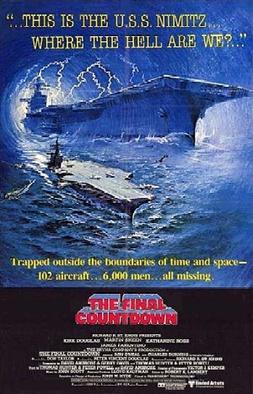
The Martian: Fun read, and reflects an amazing amount of research and thought by the author. The family enjoyed it even more than I did. Many novels have featured marooned individuals, on Mars and elsewhere, but this has a uniquely fast pace as things continue to wrong and then even wronger. I think one reason it's so currently popular is that the plot affirms hopes among the Colonize Mars crowd: if we could just hurl a few plucky humans to the surface, along with a few hundred tons of supplies, they'd take it from there and make us all proud. The Martian is based on an appealing fantasy, but it's not a good basis for a manned space program. In my conversations with astronauts about human vs. robot roles in space, they convinced me that when it comes to distant places like Mars and the moons of Jupiter and Saturn, they'd prefer that robots do the advance work, dig shelters against cosmic rays, and turn up hazards long before the humans touch down. Quite likely, the first astronauts to arrive in the vicinity wouldn't land at all. Rather they'd handle the robots' mission control from orbit. But that's too wonky for fiction. Lawrence in Arabia: Many good insights about T.E. Lawrence, the scheming British and French, the Turks, residents of Palestine, and the Saudi tribes. We hear much about what drove T.E. to such heights and such depths. But I found the side stories of other intriguers so prominently mentioned on the jacket -- presented in a parallel thriller style -- as weakly tied to the main story, because those people had little to do with Lawrence's exploits. Are they there for contrast, to show how much Lawrence did and how much they didn't do? I couldn't tell, but it was distracting. I did appreciate the occasional revisionist info correcting fictions in the David Lean motion picture. Time and Again: A classic. A wonderful book, worth reading numerous times. Jack Finney is one of the few time-travel writers to realize that great narration and characters are more important than dropping time-travelers into the Turning Points of History. One of many examples of the latter cliche is The Final Countdown, where the writers dispatch a modern aircraft carrier through a "time storm," conveniently to arrive off Hawaii hours before the attack on Pearl Harbor. Here's the poster:
The Theory That Wouldn't Die: Reading this now: nonfiction about the origin of the Bayes Theorem and why it took more than two centuries to catch hold. Why does an old theory about using prior scenarios and posterior corrections matter? It's proven vital to good decision-making in uncertain and fuzzy situations. If the wreck of Malaysia Airlines MH370 is ever found -- no, make that when it's found -- the use of Bayesian methods is likely to share some of the credit ... as it did with the location of the remains of Air France Flight 447.
Monitoring news of the explosions in the giant port of Tianjin, China. We are told that a fire in containerized cargo brought dozens of firefighters to the scene and later led to two explosions, the first about two or three metric tons of TNT-equivalent and the second less than 23 metric tons ... according to the official seismic data. I looked up the site for the China Earthquakes Networks Center, but all the information I see posted there is dated and limited to earthquakes. From the images, and the continually rising death toll in the headlines, I'd be surprised if the total yield was much below 100 tons of TNT equivalent. Damage visible in the daytime (Photo, Beijing Youth Daily):
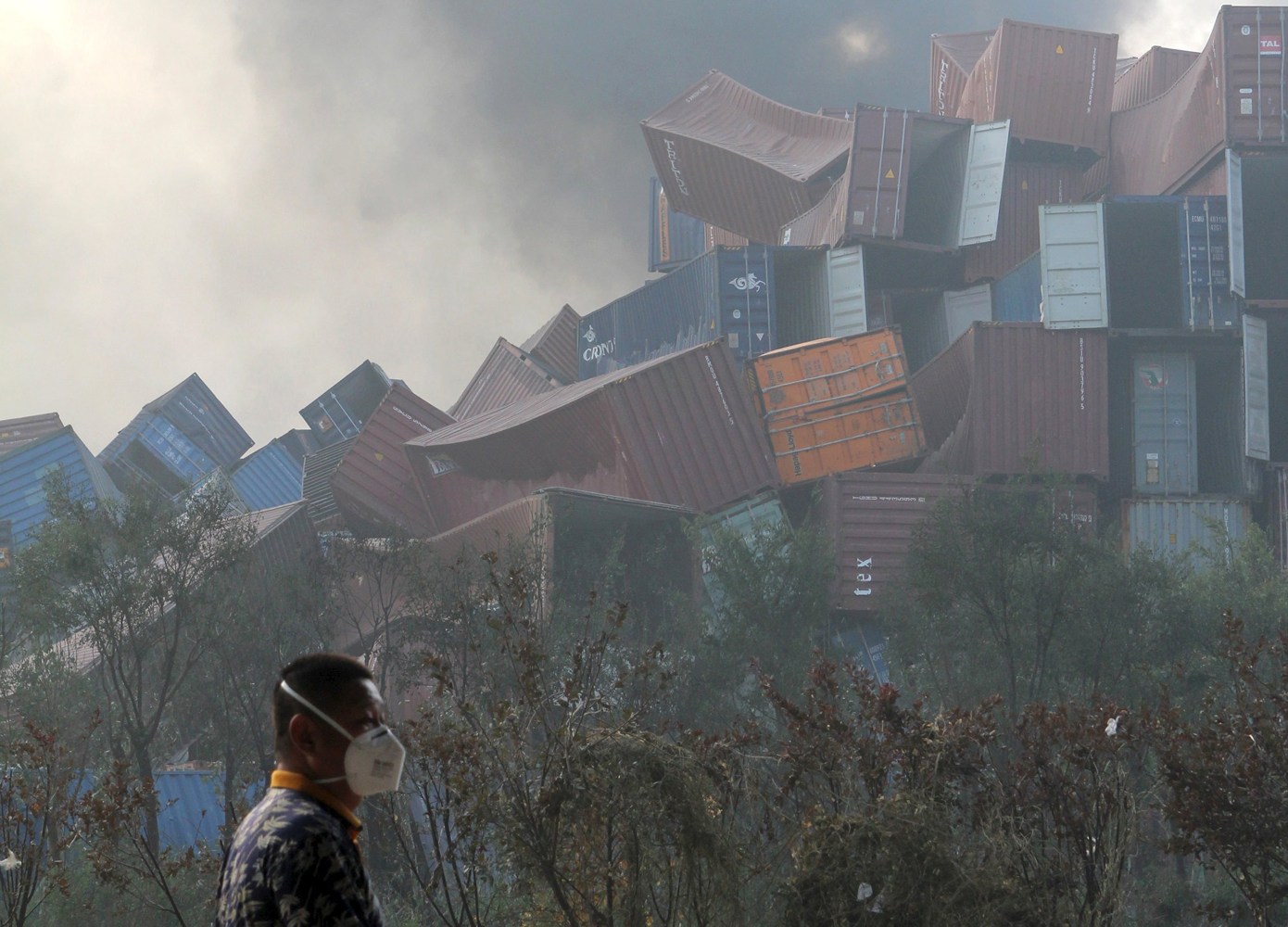
The ripple effect on the world's supply chain could last longer than hospitalizations, as Tianjin is one of the top export-import hubs for China. From NBCNews, this stack of toppled empty containers:
To the extent other stored goods in the area have been tainted by the alleged chemical releases, there may be a lot of dumping to come. Not knowing the kind of explosive materials stored there, it's hard to speculate on the chain of events. Some titanic explosions of stored ammonium-nitrate fertilizer have been triggered by fires (for more info, see Inviting Disaster, Chapter 9, but so far we don't know what energetics were being stored here.